Showing posts with label new. Show all posts

Wednesday, February 13, 2013

Are You in a New USDA Hardiness Zone?

Image:  USDA-ARS /OSU

Last year, the USDA (U.S. Department of Agriculture) along with the ARS (Agricultural Research Services) and the folks at Ohio State University updated the hardiness zone map. Why? Well, times are changing and so are average minimum temperatures, which happen to be the main factor in determining climate regions.

A Review on USDA Hardiness Zones


To recap, hardiness zones are designated areas where certain plants are suitable for growing. If you’ve ever thumbed through a seed catalog you’ve probably noticed something along the lines of “zones 4-9" under a plant’s description. This tells you that particular plant can handle the average minimum temperature for those hardiness zones, and if you happen to live in one, go ahead and grow it.

Each hardiness zone represents a 10 degree (Fahrenheit) segment. These segments, sometimes called climate regions, extend over several states and provinces. Many states and provinces have more than one hardiness zone, which is why it’s important to consult the USDA hardiness zone map for the climate zone in your area.

The New, Improved USDA Hardiness Zone Map


The new map, updated for the first time in 2012 since 1990, has changed somewhat. Don’t worry, there’s no need to go dig up your perennials and swap out your favorite evergreens for new ones. Perhaps the biggest change are the subsets associated with each hardiness zone. For example, instead of seeing zone 5, you’ll now see zone 5a and 5b.

Why the addition of climate zone subsets? Each subset represents a 5 degree difference in average minimum temperature for that area. Average minimum temperatures are gathered over a period of time so they are more accurate. The USDA hardiness zone map was updated because the earth is warming, changing average minimum temperatures.

Furthermore, internet users are going to find an internet-friendly version of the hardiness zone map online. Each zone is clearly defined on the map; gone are the days where squinting is required to find your climate region on a fuzzy picture. Perhaps one of the best features is the ability to click on a single state and have a large, static map pop up for easier viewing.

Not sure which new hardiness zone you’re in? Simply visit the map, type in your zip code and the map will generate your zone for you. It’s as simple as clicking a few buttons and hitting the enter key.

If you haven’t already, check out the new USDA hardiness zone map and choose your plants accordingly. I don’t think you’ll have to make any significant changes in your gardening. I’ve already started planning my garden and making lists of the vegetables and varieties I want to plant. Have you?


Wednesday, November 7, 2012

3 Vegetables to Try in Your Garden Next Year


Image: thebittenword.com/Flickr
Looking to spice up your vegetable garden next year? Well, why not try growing something new? I know I did last year and I’m glad I did. Now is the perfect time to scour the internet in search of a new vegetable or two to try in your own garden. 

To help give you a gentle nudge in the right direction, I’ve put together a list of my must-haves - all of which I grew in my own garden for the first time last year.


3 Must-Have Vegetables to Try Growing


Kohlrabi


Kohlrabi, once a staple in many European vegetable gardens, is quickly becoming more and more popular in the U.S. It’s readily available in most produce sections and has been popping up in more gardens across the country.

Kohlrabi has a crisp, almost sweet taste that is sort of a cross between cabbage and a mild radish. It can be eaten raw or cooked and makes a fresh addition to salads and stir-fry’s. Due to the amount of rain we had last spring, I didn’t get a huge crop of kohlrabi but the plants that survived were tasty enough to make me want to grow kohlrabi again next year.

Here are some must-have early varieties, one of which I’ll be growing myself come spring, and yes, kohlrabi can be grown in the north.


Early White Vienna - 55 Days
Eder - 38 Days
Korridor - 42 Days
Winner - 45 Days
Kolibri - 45 Days


Popcorn


Lots of people love popcorn and knowing that it came from your own garden makes it much more enjoyable. There are a handful of varieties of popcorn to choose from and many double as ornamental corn so its like getting a 2 for 1 deal when you grow it in your own garden.

I myself grew Japanese Hull-Less popcorn in my garden last year. I like this variety because it takes about 83 days to mature and since I live in the north, an early variety works best for me. The trick to growing popcorn is to let the kernels dry right on the stalks even after they’ve turned brown.


Robust - 112 Days
Red Beauty - 120 Days
Neon Pink - 110 Days
Emerald Green - 110 Days
Shades of Blue - 110 Days
Japanese White Hull-Less - 83 Days


Yard Long Beans


Image: clayirving/Flickr


Yard long beans have a slightly different taste than other varieties of beans. They're a bit milder in flavor, meaning not as sweet. I love them in a stir fry or lightly sautéed in olive oil. What’s fun about growing your own yard long beans is watching them grow. Some beans can grow an inch or two in a single day. If you do decide to try growing yard long beans in your own garden, keep in mind that they are pole beans so they’ll grow best along a fence or trellis.

Yard long beans taste the best when they’re about the thickness of a pencil. In my opinion, they are a must-have and an exciting new vegetable to grow due to their size alone. The three varieties I have listed below can grow from 15 - 20” long.

Orient Wonder - 85 Days
Gita - 78 Days
Red Noodle - 85 Days

Which new vegetables are you going to try in your garden next year? Have any suggestions?


Thursday, May 3, 2012

Try Growing a New Vegetable in 2012


As I wrote in a previous post, “Choosing Which Vegetables to Grow in Your Garden,” I stated that I’m going to try growing a new vegetable this year, something I’ve never grown before. I’m going to give kohlrabi a try. I’ve seen it on cooking shows a number of times and quiet frankly, am intrigued by the way it looks.

I thought I’d a list a few more vegetables to give a try in your own organic vegetable garden this year and provide a place for people to list their “must haves” and own suggestions.

These are not new varieties and perhaps are vegetables you’ve already heard of. They’re veggies that have peaked my interest and all can be grown in Maine.

Kohlrabi


If you can grow turnips in your area, then you can grow kohlrabi as well. Kohlrabi is a turnip-like member of the cabbage family. This veggie prefers well drained soil and thrives in cool temperatures.

The bulb and young leaves are the edible portions of this vegetable. From what I’ve read, (I’ve never tried it) kohlrabi has a broccoli stem or cabbage taste and comes in purple, green, and white. I plan on eating some cooked and raw and pickling the rest.

Tomatillo


Tomatillos are small fruits in the tomato family. They are protected by a papery husk and are eaten when green or yellow and primarily used in Mexican cooking. Some people eat raw tomatillos which are tart in flavor. Cooking them takes the tartness away.

Tomatillos can be grown from seed but in Maine’s short growing season I’d recommend starting your own plants indoors or opting for seedlings. When husks are dry and begin splitting tomatillos are ready for picking. Tomatillos still wrapped in their husks can store for up to a month in the fridge.

Mini Mexican Watermelons


Mini Mexican watermelons are a great fruit to try in your garden this year. They grow on vines which can be supported by a trellis or old fence. The fruit are roughly the size of grapes when fully mature.

Don’t be fooled by the name though because these mini watermelons taste more like cucumbers than traditional watermelon. They’re great for pickling or eating fresh from the garden. (These are on my list to try next year)

Broccoflower


Do you like broccoli and cauliflower? Can’t decide which one to grow? Why not try a cross between the two? Broccoflower tastes similar to broccoli and cauliflower with a slightly sweeter taste.

Broccoflower can be substituted for broccoli, cauliflower or both in recipes. This vegetable is tender and shouldn’t be overcooked. You can also eat it raw straight from the garden.

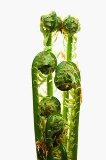
Fiddleheads


Fiddleheads are a spring delicacy in Maine. The young, coiled shoots are found in the wild along riverbeds and streams. If you’re not the foraging type, why not try growing fiddleheads yourself?

In Maine, the ostrich fern grows particularly well. They can be identified by the brown, paper-like covering on the uncoiled section of the fern. The University of Maine extension advises to properly wash and cook fiddleheads before eating them. 

Which new to you vegetables are you going to try growing in your garden this year? Have any suggestions?